
 By
By 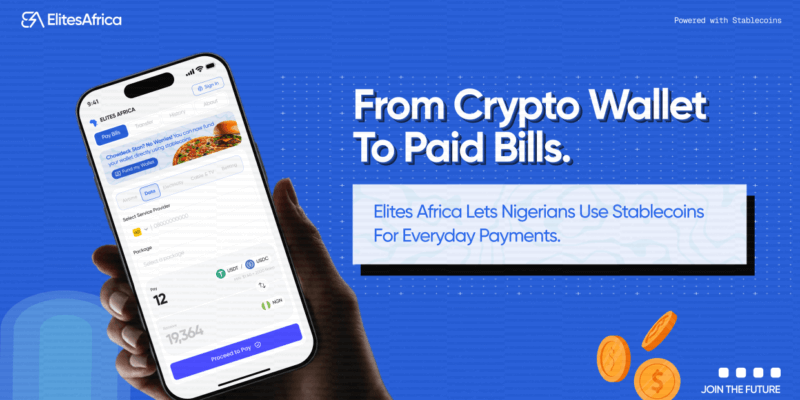
Stablecoin spending in Nigeria remains limited, even as holding volumes continue to rise. Elites Africa is building for a different behaviour: paying bills and buying services directly from crypto wallets instead of converting to cash first.
The company’s platform allows users to purchase airtime and data, renew cable and TV subscriptions, pay electricity bills, and fund their Chowdeck wallets using USDT or USDC. Transactions are executed directly from users’ crypto wallets without converting to naira.
Nigeria consistently ranks among the world’s most active crypto markets. In Chainalysis’ 2023 Global Crypto Adoption Index, the country placed second globally in grassroots adoption. Stablecoins have become a practical hedge against naira volatility and foreign exchange restrictions, particularly among freelancers, traders, and cross-border merchants. Usage, however, has largely centred on holding and peer-to-peer transfers.
Most stablecoin users who want to pay for everyday services still move through P2P markets. That process introduces spreads between buy and sell rates, settlement delays, and counterparty risk. Fraud in informal P2P channels remains a recurring complaint among retail users.
Elites Africa removes that conversion layer. Customers can connect their wallet, transfer to a designated wallet address, or scan a QR code to complete payment. Settlement occurs in crypto, while the merchant receives value without requiring the customer to first exit into the banking system.
For stablecoin holders, the key constraint has not been access to tokens but access to spending rails. Utility bills, television subscriptions, and food delivery still operate in naira ecosystems. Bridging that gap determines whether digital dollars remain savings instruments or become transactional tools.
Elites Africa currently supports USDT and USDC and says it plans to expand services as usage grows.
The larger question is behavioural. Nigerian crypto adoption has been driven by capital preservation and cross-border transfers. Whether users are willing to spend stablecoins domestically rather than treat them as a store of value will determine the pace of stablecoin spending in Nigeria.
Infrastructure alone does not guarantee habit change. Pricing, trust, and ease of use will decide whether users bypass P2P markets and transact directly. Elites Africa is wagering that convenience will win.
Comments