

 By
By 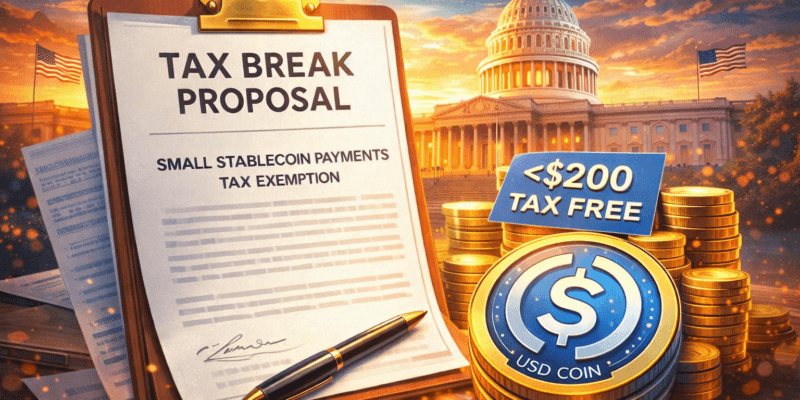
US Stablecoin Tax Break Proposal is gaining attention in Washington as members of the U.S. House of Representatives roll out a draft framework aimed at modernizing how digital assets are taxed. The discussion draft is designed to ease tax reporting burdens for everyday cryptocurrency users, especially those who use stablecoins in small routine payments, and to offer more flexible treatment of staking and mining rewards.
There is also a plan to exempt small stablecoin transactions from capital gains taxes. Under the framework, regulated, dollar-pegged stablecoin payments valued at less than $200 would not be subject to tax when used for everyday transactions such as paying for goods, services or remittances. The exemption would only apply if the stablecoin meets specific criteria for backing and stability. Lawmakers hope this will make it easier for people to use digital money without worrying about complex tax filings for tiny gains that barely affect their finances.
Representatives Max Miller of Ohio and Steven Horsford of Nevada are leading the effort, which also addresses how staking and mining rewards should be treated for tax purposes. Under existing rules, rewards earned from staking a digital asset are often taxed as income at the time they are received, even if the holder has not sold or converted the asset. The draft bill would allow taxpayers to defer recognition of those rewards for up to five years. This change could help align tax treatment with how users actually benefit from their digital holdings.
Supporters of the measure argue that the U.S. tax code has not kept pace with modern financial technology. Stablecoins are increasingly used not only for trading but also for real-world payments, international transfers and quick peer-to-peer transactions. Advocates say that easing tax burdens on small payments and providing clear rules for reward income would encourage broader adoption of digital assets and help bring innovation into mainstream commerce.
Critics caution that any tax break must be carefully guarded to prevent abuse. Lawmakers are considering guardrails to stop people from splitting payments into multiple small transactions to avoid taxes. They also emphasize that the exemption applies only to regulated stablecoins, not all digital assets. This distinction aims to protect consumers and ensure that only stablecoins with clear backing and oversight benefit from the proposed tax relief.
The proposal is not law yet. It is a draft that reflects ongoing efforts in Congress to build a clearer crypto tax framework and bring digital assets more in line with traditional financial instruments. If adopted and refined, the bill could make stablecoins more practical for everyday use and reduce obstacles for people who want to participate in the growing digital economy.
Stablecoin enthusiasts and the broader crypto community will be watching closely as discussions continue in the House Ways and Means Committee. The outcome could influence how Americans use stablecoins in everyday life and reshape the tax landscape for digital assets in 2026.
Comments